
There’s nothing quite like the sweet and savory harmony of this Baked Salmon with Honey Soy Glaze Recipe. The moment this glaze caramelizes in the oven, your kitchen fills with the most inviting aroma, making it hard to wait for dinner. Trust me, it’s a game-changer worth trying soon.

Jump to:
Why You'll Love This Recipe
I can't tell you how many times this baked salmon with honey soy glaze recipe has saved me on busy weeknights. It’s incredibly simple yet feels special enough for guests. The balance between sweet honey and salty soy is just perfection on flaky, tender salmon.
- Effortless Flavor Boost: The glaze takes just minutes to mix but transforms ordinary salmon into something extraordinary.
- Healthy & Balanced: Salmon is packed with omega-3s and protein, and the glaze adds flavor without overpowering its natural richness.
- Flexible Cooking Time: You can easily adjust how long to bake for your perfect doneness, whether you like it medium-rare or fully cooked.
- Easy Cleanup: Using parchment paper or foil means this recipe helps keep your kitchen fuss-free.
Ingredients & Why They Work
Each ingredient here plays a simple but crucial role. The honey rounds out the salty punch of soy sauce, while garlic and Dijon mustard add layers of punchy, savory notes. Plus, olive oil keeps everything moist and helps that glaze stick beautifully to the salmon.

- Salmon fillets: Look for fresh, skin-on fillets—the skin crisps up nicely and helps keep the fish juicy.
- Low sodium soy sauce: Using low sodium keeps the glaze balanced and prevents it from being too salty.
- Olive oil: Adds moisture and richness without overpowering the glaze’s bright flavors.
- Honey: The natural sweetness that caramelizes beautifully in the oven for that irresistible glaze.
- Dijon mustard: Adds a subtle tang and depth, elevating the glaze from simple to sophisticated.
- Garlic: Use fresh minced garlic for the best punch; it complements the glaze perfectly.
Make It Your Way
One of the things I love most about this Baked Salmon with Honey Soy Glaze Recipe is how easy it is to tweak. I often swap out Dijon mustard for whole grain mustard if I want a bit more texture, or I’ll add a pinch of red pepper flakes to bring a gentle heat. You can absolutely personalize it!
- Variation: Sometimes I sprinkle sliced green onions and sesame seeds on top right before serving—adds a fresh crunch and a touch of Asian flair.
- Dietary tweak: If you want to keep it paleo-friendly, just make sure your honey is raw and unfiltered, and the soy sauce is tamari for gluten-free.
- Seasonal changes: Adding thinly sliced ginger or orange zest to the glaze can give a fresh twist depending on the season.
Step-by-Step: How I Make Baked Salmon with Honey Soy Glaze Recipe

Step 1: Bring Your Salmon to Room Temperature
This is a simple but crucial first step I never skip. Taking the salmon out of the fridge about 15–20 minutes before you bake ensures it cooks evenly. I usually place it on the counter while mixing the glaze to save time. Cold salmon straight from the fridge can cook unevenly and might dry out.
Step 2: Whisk Together the Glaze
In a small bowl, I mix low sodium soy sauce, olive oil, honey, Dijon mustard, and freshly minced garlic. Whisk it until glossy and well combined. This is where the magic happens—each ingredient brings harmony to the glaze's flavor.
Step 3: Prep Your Baking Dish
I line my 9×13-inch baking dish with parchment paper. This step is a lifesaver because it prevents sticking and makes cleanup super easy—trust me, who wants to scrub sticky glaze off a dish after a busy day?
Step 4: Brush Half the Glaze on the Salmon
Place the salmon fillets skin-side down in the dish. I like to reserve half the glaze separately because I brush the remaining half on top of the fillets before baking. Make sure every fillet gets an even coating—that syrupy layer is what locks in flavor and moisture.
Step 5: Bake and Glaze Again
Bake the salmon at 400°F for 12 minutes. Then, pull it out and brush on the remaining glaze. This second coating helps create that beautiful caramelized finish. Pop it back in the oven for another 2 to 8 minutes, checking for doneness. Thicker fillets need more time, so keep an eye out—the salmon should flake easily with a fork when done.
Top Tip
I learned from experience that watching your salmon closely during that last few minutes of baking makes all the difference. Salmon is forgiving, but it can quickly go from perfectly flaky to dry if left too long.
Creative Ways to Present
For special occasions, I like serving the salmon atop a bed of lightly dressed baby spinach or arugula—gives a beautiful pop of green and a slight pepperiness that contrasts nicely. You can plate each fillet with a drizzle of extra glaze and a lemon wedge on the side to make it look restaurant-worthy.
Make Ahead and Storage
Storing Leftovers
I store leftover salmon in an airtight container in the fridge and enjoy it within two days. To keep the glaze’s flavor and moisture, I usually separate the salmon from any excess liquid that collects in the container—this helps prevent it from getting soggy.
Freezing
You can freeze leftover cooked salmon wrapped tightly in plastic wrap then foil, or in a freezer safe container. When freezing, try to consume within 1-2 months for best texture. Just make sure to thaw overnight in the fridge before reheating gently.
Reheating
Reheating gently is key. I like to warm it in a preheated oven at 275°F for about 10 minutes, covered loosely with foil to keep moisture in. Microwaving on low power works if you’re in a rush, but I find the oven method keeps the salmon flaky and tender without drying it out.
Frequently Asked Questions:
Yes! Just make sure to thaw the salmon completely in the refrigerator before baking to ensure even cooking and the best texture.
You can substitute Dijon mustard with yellow mustard or whole grain mustard—both add tanginess, but Dijon offers a smoother texture and slightly milder flavor.
Brushing the glaze twice enhances the flavor and creates a glossy, caramelized finish that you won’t get if you add it only once. It’s a small extra step that really makes a difference.
The salmon should flake easily when tested with a fork. If you have a food thermometer, an internal temperature of 125-130°F is ideal for tender, moist salmon. The FDA recommends 145°F, but many prefer it slightly less cooked for better texture.
Final Thoughts
Honestly, this Baked Salmon with Honey Soy Glaze Recipe feels like the easiest way to impress at dinner time without spending hours in the kitchen. Every time I make it, friends ask for the recipe because it tastes so much like a restaurant dish. Give it a try—you’ll love how simple it is to make salmon taste spectacular.
Print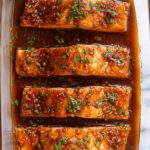
Baked Salmon with Honey Soy Glaze Recipe
- Prep Time: 10 minutes
- Cook Time: 20 minutes
- Total Time: 30 minutes
- Yield: 4 servings
- Category: Main Course
- Method: Baking
- Cuisine: American
- Diet: Low Sodium
Description
This Best Ever Baked Salmon recipe features tender, flaky salmon fillets glazed with a flavorful mixture of low sodium soy sauce, olive oil, honey, Dijon mustard, and garlic. Perfectly baked at 400°F, this dish offers a simple yet delicious way to enjoy salmon that’s ideal for a healthy weeknight dinner.
Ingredients
Salmon
- 4 salmon fillets, 6 ounces each, skin on
Glaze
- 1 ½ tablespoons low sodium soy sauce
- 1 tablespoon olive oil
- 1 tablespoon honey
- 1 ½ teaspoons Dijon mustard
- 2 cloves garlic, minced
Instructions
- Bring salmon to room temperature: Remove the salmon from the refrigerator and let it sit at room temperature while you prepare the other ingredients to ensure even cooking.
- Preheat and prepare baking dish: Preheat the oven to 400° F. Line a 9×13-inch baking dish with parchment paper or foil for easy cleanup.
- Make the glaze: In a small bowl, whisk together the low sodium soy sauce, olive oil, honey, Dijon mustard, and minced garlic until well combined.
- Arrange and glaze salmon: Place the salmon fillets skin side down in the prepared baking dish. Reserve half of the glaze in a clean dish, then brush or spoon the remaining half over the salmon fillets.
- Bake the salmon: Bake the salmon for 12 minutes, then brush on the remaining glaze. Continue baking for an additional 8 minutes or until the salmon flakes easily with a fork and is cooked to your liking. Thicker fillets may require longer baking. For safety, the FDA recommends an internal temperature of 145° F, though some prefer 125-130° F with a 3-minute rest before serving.
Notes
- You can swap the glaze for a dry rub using your favorite salmon seasoning if you prefer a dry texture instead of a glaze.
- Thicker salmon fillets will take longer to cook through; adjust baking time accordingly.
- Using parchment paper or foil helps prevent sticking and makes cleanup easier.
- Allowing the salmon to rest for a few minutes after baking helps retain moisture.
Nutrition
- Serving Size: 1 salmon fillet
- Calories: 320 kcal
- Sugar: 5 g
- Sodium: 350 mg
- Fat: 18 g
- Saturated Fat: 3 g
- Unsaturated Fat: 12 g
- Trans Fat: 0 g
- Carbohydrates: 6 g
- Fiber: 0 g
- Protein: 34 g
- Cholesterol: 80 mg




Leave a Reply