
There’s something irresistibly charming about the caramelized edges and creamy center of the Best-Ever Basque Cheesecake Recipe. It’s a showstopper with its rustic look and that signature burnt top that somehow makes it even more delicious. Honestly, it’s one of those desserts that’s as fun to make as it is to eat!

Jump to:
Why You'll Love This Recipe
I absolutely love this Basque cheesecake because it’s not your typical smooth-and-polished cheesecake. The rustic burnt top gives it a depth of flavor and charm that always gets compliments. Plus, it’s surprisingly easy to pull off, even if you’re not a pro baker.
- Rustic Charm: The caramelized, burnt edges give it a unique flavor and a homemade look that never fails to impress guests.
- Simplicity: This recipe uses just a handful of ingredients and straightforward steps—perfect for making in a busy kitchen.
- Creamy Texture: It’s silky, smooth, and melts in your mouth with just the right amount of jiggle in the center.
- Versatile Sweetness: You can tweak the sugar level easily to suit your taste, whether you want it sweeter or more subtle.

Ingredients & Why They Work
This Basque cheesecake recipe is delightfully simple but each ingredient plays an important role to create that velvety bite and golden top. I always recommend using room temperature ingredients, especially cream cheese and eggs, because it helps the batter come together without lumps.

- Cream Cheese: Full-fat and at room temperature for that rich, creamy base that’s essential to cheesecake.
- Granulated Sugar: Adds the perfect level of sweetness and helps with browning the top.
- Eggs: Room temperature eggs emulsify better, giving the cheesecake its silky texture without curdling.
- Heavy Cream: Using full-fat cream or even farm-fresh double cream adds luxurious creaminess and richness.
- Vanilla Extract: Brings that subtle warm note that complements the tang of the cheese beautifully.
- Salt: A pinch to balance sweetness and enhance all the flavors.
- All-Purpose Flour: Just a touch to help stabilize the cheesecake without making it cakey.
Make It Your Way
I like to keep this cheesecake classic, but every so often I’ll add a twist – like a swirl of fruit purée or a sprinkle of cinnamon in the batter. Feel free to experiment! This recipe is so forgiving it easily adapts to your taste buds.
- Variation: Once, I tried adding a hint of lemon zest for a bright pop of freshness. It gave the cheesecake an unexpectedly delightful lift!
- Dietary tweak: You can swap regular heavy cream for lactose-free versions and still get that creamy texture.
- Sweetness level: Don’t hesitate to tweak the sugar between 1¼ to 2 cups depending on how sweet you like it.
Step-by-Step: How I Make Best-Ever Basque Cheesecake Recipe
Step 1: Prepare Your Pan Like a Pro
I always line my 9-inch springform pan with two crisscrossed layers of parchment paper. Here’s a trick: wet the parchment sheets, scrunch them up, then smooth out and dry—this makes the paper flexible and easier to fit snugly around the pan. Don’t forget you want the parchment to rise about 2 inches over the rim; that rustic edge is what makes the cheesecake so special.
Step 2: Whip the Cream Cheese Until Silky
Beat the cream cheese for a full 2 minutes to get rid of lumps and create a smooth base. I use my stand mixer with the whisk attachment—this step really makes a difference in texture.
Step 3: Sweeten and Incorporate Eggs Slowly
Gradually add sugar on medium speed for about 2 minutes until the mixture is silky and no crunchy sugar remains. Then add the eggs one at a time, mixing just enough to incorporate each before adding the next. Go slow here—you want the batter smooth, not over-aerated to avoid bubbles.
Step 4: Mix in Cream, Vanilla, and Flour Gently
With your mixer on low, add the heavy cream, vanilla, and salt. Then sift in the flour and mix just for about 20 seconds to combine. Over-mixing at this stage can trap air, meaning a souffle-like texture rather than creamy cheesecake. I remind myself: slow and steady wins this race.
Step 5: Bake and Watch the Magic Happen
Pour the batter into the prepared pan, place it on a rimmed baking sheet, and bake at 425°F for 50 to 65 minutes. The top will puff up beautifully and then sink as it cools—don’t worry, that’s exactly how it should be! Aim for a deeply golden brown top with a still-jiggly center. That wobble means it’ll set perfectly once chilled.
Step 6: Cool Before You Chill
Once out of the oven, I let the cheesecake cool completely at room temperature on a wire rack before refrigerating it for at least 8 hours or overnight. This chilling step helps it develop that perfect creamy texture inside. Patience here truly pays off.
Step 7: Slice with Warm Knife for Perfect Cuts
When ready to serve, lift the cheesecake using the parchment edges to avoid damage. For clean, pretty slices, run a chef’s knife under hot water, wipe it dry, then slice—repeat after each cut. This simple trick keeps your cheesecake looking pretty and professional.
Top Tip
After baking this cheesecake many times, I’ve learned that patience, gentle mixing, and paying attention to the parchment liner make all the difference. Here are a few tips I swear by to ensure your Best-Ever Basque Cheesecake turns out beautifully every time.
- Don’t Overmix: Particularly when adding eggs and cream, mix slowly and just enough to combine – this avoids air bubbles and keeps the cheesecake silky.
- Parchment Prep: Scrunch and wet your parchment paper before lining the pan – this makes it easier to shape and results in the iconic rustic edges.
- Watch the Bake: The cheesecake should be deeply golden on top but still jiggle in the center when you take it out – it will firm up as it cools and chills.
- Cool Before Chilling: Don’t rush cooling in the fridge right after baking or it can crack; let it come to room temp on a wire rack first.
How to Serve Best-Ever Basque Cheesecake Recipe

Garnishes
I love keeping this cheesecake simple and letting its flavor shine, so I usually top it with fresh berries or a dollop of whipped cream. Sometimes a spoonful of tangy fruit compote—like raspberry or cherry—adds a lovely freshness that pairs beautifully with the creamy richness.
Side Dishes
This cheesecake stands out on its own but pairs wonderfully with a light espresso or a citrusy salad if you want to balance the richness. For special occasions, a scoop of vanilla ice cream on the side always gets rave reviews!
Creative Ways to Present
For festive gatherings, I’ve garnished with edible flowers or a drizzle of salted caramel to amp up the wow factor. You can also slice the cake into mini portions and serve in little jars layered with fruit – perfect for parties and sharing.
Make Ahead and Storage
Storing Leftovers
Store your leftover Basque cheesecake in the fridge tightly covered with plastic wrap or inside an airtight container. It stays fresh and creamy for up to a week, making it a great make-ahead dessert option for busy weeks.
Freezing
I’ve frozen this cheesecake successfully by wrapping it well in plastic wrap and foil after it fully chills. When you’re ready, thaw it overnight in the fridge. The texture remains just as creamy and delicious after freezing—a big win if you want to prep in advance.
Reheating
Since this cheesecake is best enjoyed at room temperature, I usually let slices sit out for an hour or so before serving. If you're in a hurry, a quick 10-minute stint in a 300°F oven works as a gentle reheat without drying it out.
Frequently Asked Questions:
Basque cheesecake is known for its deeply caramelized, almost burnt top and a creamy, custardy center. Unlike traditional cheesecakes, it doesn’t have a crust and embraces a rustic, imperfect appearance that adds to its charm.
For the best texture and flavor, it’s important to use full-fat cream cheese and heavy cream. Low-fat or milk substitutes tend to affect the creamy texture and richness that this Basque cheesecake is famous for.
The puffing up happens as the batter bakes and traps air, and as it cools, it settles back down forming a creamy, custardy center. This is entirely normal and part of the Basque cheesecake’s charm.
Run a large chef’s knife under hot water, dry it, and slice the cheesecake. Repeat after each cut to avoid tearing and maintain clean, smooth slices.
Final Thoughts
The Best-Ever Basque Cheesecake Recipe is one of those desserts I’ll keep making forever. It’s surprisingly simple, yet uniquely elegant—and every time I bring it out, people marvel at that rustic burnt top and creamy inside. Give it a try; I promise it’ll become a new favorite for you, too. Plus, it’s a great way to impress your friends without stressing in the kitchen.
Print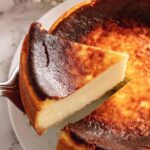
Best-Ever Basque Cheesecake Recipe
- Prep Time: 15 minutes
- Cook Time: 1 hour
- Total Time: 11 hours 15 minutes
- Yield: 12 servings
- Category: Dessert
- Method: Baking
- Cuisine: Spanish
- Diet: Vegetarian
Description
This Basque Cheesecake is a creamy, rich dessert known for its burnt golden top and rustic, jiggly center. Made with full-fat cream cheese, heavy cream, eggs, sugar, and a touch of flour, it's baked at a high temperature to achieve its signature caramelized surface while maintaining a silky smooth interior. Perfect for those who love a decadent yet simple cheesecake with a unique appearance.
Ingredients
Cheesecake Batter
- 32 ounces cream cheese, room temperature and full-fat only
- 1½ cups granulated sugar
- 5 large eggs, room temperature
- 1½ cups heavy cream, room temperature
- 1 tablespoon vanilla extract
- 1 teaspoon salt
- ⅓ cup all-purpose flour, sifted
Instructions
- Prepare the pan: Preheat the oven to 425°F. Line a 9 or 10-inch springform pan with a double layer of criss-crossed parchment paper. Wet, scrunch, and dry the parchment paper to make it easier to work with, ensuring it extends about 2 inches above the pan's top. Set aside.
- Whip cream cheese: In a large bowl or stand mixer with a whisk attachment, whip the cream cheese for 2 minutes until smooth and creamy.
- Add sugar: Gradually add the granulated sugar on medium speed and whisk for about 2 minutes until the mixture is smooth. Scrape down the sides as needed to eliminate lumps.
- Incorporate eggs: Add the eggs one at a time on low speed, mixing gently. Wait until the yellow from the previous egg is mostly incorporated before adding the next to prevent overmixing.
- Add cream and flavorings: On low speed, add the heavy cream, vanilla extract, and salt. Mix until fully combined, taking care to keep mixing gentle.
- Add flour: Sift the flour into the batter and mix for about 20 seconds on low speed to incorporate without creating lumps.
- Pour and bake: Pour the batter into the prepared pan. Place the pan on a rimmed baking sheet on the middle oven rack and bake for 65 minutes. The cheesecake will puff during baking and sink as it cools; the top should be golden brown and the center slightly jiggly when done.
- Cool down: Transfer the cheesecake in its pan to a wire rack to cool to room temperature fully.
- Chill: Refrigerate the cheesecake in the pan for at least 8 hours or preferably overnight to set properly.
- Serve: Remove the cheesecake from the refrigerator 1 to 2 hours before serving to come to room temperature. Use the parchment edges to lift it off the pan base, slice with a knife warmed under hot water for clean cuts, and serve plain or with fruit compote or toppings of choice.
Notes
- Use farm fresh double cream if available instead of regular heavy cream for superior richness and flavor.
- Do not remove the cheesecake from the pan until it has completely cooled to prevent breaking.
- Serve the cheesecake at room temperature but always store it refrigerated.
- The cheesecake can be stored in the refrigerator for up to 1 week.
- Be mindful of mixing speeds and times to avoid incorporating too much air, which would change the texture.
- The cheesecake can be frozen for up to 3 months when wrapped properly. Thaw in the refrigerator before serving.
- This recipe embraces a rustic, imperfect look that is part of the Basque cheesecake’s charm and appeal.
- Adjust sugar from 1¼ cups to 2 cups depending on your sweetness preference.
Nutrition
- Serving Size: 1 slice
- Calories: 450 kcal
- Sugar: 30 g
- Sodium: 280 mg
- Fat: 35 g
- Saturated Fat: 22 g
- Unsaturated Fat: 10 g
- Trans Fat: 0 g
- Carbohydrates: 28 g
- Fiber: 0 g
- Protein: 7 g
- Cholesterol: 150 mg



Leave a Reply