
There's something incredibly addictive about crispy, saucy chicken that just melts in your mouth — that's exactly what the Korean Fried Chicken Recipe delivers. The double-frying method creates a crunch that sticks with you, paired with an irresistible sweet-tangy or spicy glaze you'll want to make again and again.

Jump to:
Why You'll Love This Recipe
This Korean Fried Chicken Recipe is a game-changer. From the perfectly crisp skin to the explosive flavor of the sauces, it’s one of those dishes that feels special enough for guests but simple enough to whip up on a weeknight. Honestly, once you master the double-fry technique, you’ll get that addictive crisp that makes this style of fried chicken totally unique.
- Crunchiness That Lasts: The secret double fry means your chicken stays crispy long after frying, no sogginess here.
- Versatile Sauces: Whether you prefer sweet soy garlic or spicy gochujang, the sauce options are layered with flavor and easy to make.
- Simple Ingredients: With common pantry staples and easy-to-find Korean condiments, this recipe is very approachable.
- Perfect for Sharing: Chicken wings make a fantastic party bite or casual dinner — perfect for family, friends, and game day.
Ingredients & Why They Work
The balance of crispy chicken with garlicky heat and either sweet or spicy sauces is what keeps me coming back to this Korean Fried Chicken Recipe. Each ingredient adds its own part, from the marinating spices to the starch that ensures crunch — plus the sauces bring that bold signature flavor.

- Chicken Wings: I recommend skin-on wings for maximum crispiness and juiciness inside.
- Garlic & Ginger: Fresh aromatics give a fragrant base during marination and sauce making.
- Mirin: Adds a subtle sweetness and tenderizes the chicken.
- Sea Salt: Simple seasoning that elevates all the flavors.
- Flour or Starches (Flour, Cornstarch, Potato Starch): Each gives a slightly different crunch—potato starch is my personal fave for extra crisp.
- Baking Powder: Helps create an airy, crispy coating on the chicken skin.
- Honey & Soy Sauce (Soy Garlic Sauce): These blend sweetness and savory depth perfectly.
- Gochujang: The classic Korean chili paste that lends heat and complexity to the spicy sauce.
- Strawberry Jam: A surprising sweet twist that tempers gochujang's heat and rounds out the flavors.
- Rice Wine Vinegar: Adds brightness and cuts through the rich fried chicken.
- Hoisin Sauce & Sesame Oil: Deeper umami and a toasty hint to complement the soy garlic sauce.
Make It Your Way
I love switching up the sauces depending on my mood — sometimes sweet and garlicky, other times fiery with gochujang. You can also experiment with the coating by trying potato starch for the crispiest bite or flour for a more traditional crunch. Feel free to adjust the heat level or sweetness to suit your taste buds.
- Variation: I once made this with boneless chicken thighs instead of wings — it was finger-licking good and easier to eat for a crowd.
- Dietary modification: For gluten-free, use potato starch and tamari sauce instead of soy sauce.
- Spice it up: Add extra gochujang or a splash of chili oil in the sauce for more heat.
- Make it milder: Cut back on garlic or sugar for a gentler flavor profile.
Step-by-Step: How I Make Korean Fried Chicken Recipe

Step 1: Marinate to Infuse Flavors
Start by seasoning your chicken wings with finely minced garlic, grated ginger, sea salt, and mirin. I like to let them marinate for at least an hour — this step is what adds that lovely, deep flavor inside every bite. If you're short on time, even 30 minutes helps, but longer is better for that punch of flavor.
Step 2: Coat the Wings in Dry Batter
Mix your flour (or cornstarch, or potato starch) with baking powder until combined. Coat each wing thoroughly, making sure every nook and cranny is covered — I tap off excess but want a good thick layer. This coating creates that iconic crunchy texture.
Step 3: First Fry at Medium Heat
Heat vegetable oil to around 345°F and fry the wings in batches for 5 to 7 minutes. Don’t overcrowd the pot — keeping the temperature consistent helps the fat render and the chicken cook evenly. Remove and let them cool on a wire rack; this drying step is crucial for crispiness.
Step 4: Double Fry at Higher Temperature
Now raise the oil temperature to 375°F. Fry the wings again in batches until they turn golden brown and extra crisp, another 2 to 3 minutes. This double frying is the secret to that unforgettable crunch that defines Korean fried chicken.
Step 5: Make the Sauce & Toss
While the chicken is frying, make your sauce — either the sweet soy garlic or the spicy gochujang variant. I boil all the ingredients together, then reduce to thicken. When your wings are hot and crispy, toss them gently in the sauce to coat evenly. Serve immediately for best texture.
Top Tip
This Korean Fried Chicken Recipe really shines when you nail the double frying and sauce balance — after trying it several times, I’ve learned a few tricks that saved me from soggy wings and bland taste.
- Oil Temperature Control: Use a thermometer and keep your oil temperature steady; too low and the chicken soaks up oil, too high and you risk burning the coating.
- Drying Is Key: Letting the wings rest on a wire rack between fries dries them out a bit, ensuring the second fry crisps them perfectly.
- Sauce Consistency: Reduce sauces until slightly thick so they cling nicely but don't sog the chicken; if too thick, thin with a bit of water.
- Don’t Overcrowd: Fry wings in small batches — this helps maintain both temperature and crispiness.
How to Serve Korean Fried Chicken Recipe

Garnishes
I usually sprinkle toasted sesame seeds and sliced green onions atop my sauced wings — they add a fresh crunch and a little pop of color that makes the plate sing. Korean pickled radish (kkakdugi) on the side is a must-have in my book to balance the richness with some crisp, tangy bites.
Side Dishes
I love pairing these wings with simple steamed rice or a cold cucumber salad. If you’re feeling fancy, kimchi fried rice or japchae stir-fried glass noodles take it to another level and round out the flavors beautifully.
Creative Ways to Present
For gatherings, I’ve set up a DIY sauce bar with both the soy garlic and gochujang sauces alongside fresh veggies and pickles — everyone loves customizing their own wings. Serving wings in a big wooden bowl lined with parchment paper makes for perfect sharing vibes, too.
Make Ahead and Storage
Storing Leftovers
Store any leftover wings in an airtight container in the fridge for up to 3 days. I recommend removing excess sauce if you want to keep the crispiness longer and tossing them with sauce fresh before serving again.
Freezing
I’ve frozen leftover cooked wings successfully by flash freezing them on a tray first, then transferring to a freezer bag. When ready to eat, thaw in the fridge overnight and reheat in the oven for best texture retention.
Reheating
To reheat and keep wings crispy, I use the oven at 350°F wrapped loosely with foil to warm through without drying them out or burning the sauce. You can refresh the crunch with a quick broil at the end if you’re watching closely.
Frequently Asked Questions:
The double fry technique is key—it first cooks the chicken at a lower temperature to render fat and then crisps the exterior at a higher temperature, resulting in an ultra-crispy skin without the usual greasiness. Plus, the sauces add a flavorful twist distinct from typical fried chicken.
Absolutely! Boneless chicken thighs or drumsticks work well, but cooking times may vary slightly. Just make sure to adjust frying times so the chicken is fully cooked and crispy.
Potato starch tends to create the crispiest and lightest coating, which is why many Korean recipes prefer it. However, if you don’t have it handy, cornstarch or flour can work fine—just expect a different texture.
Store leftovers in an airtight container and separate any sauces if possible. Reheat in the oven on a wire rack to keep the chicken crispy. Avoid microwaving which can make it soggy.
Final Thoughts
There’s something utterly comforting about this Korean Fried Chicken Recipe that keeps me coming back. Whether it’s a casual family meal or sharing with friends, those crispy wings drenched in sauce are pure joy on a plate. Trust me, once you try making it yourself, you’ll understand why it’s a favorite in Korean households and beyond — it’s crispy, flavorful, and simply unforgettable.
Print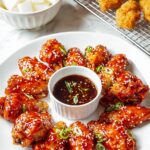
Korean Fried Chicken Recipe
- Prep Time: 10 minutes
- Cook Time: 30 minutes
- Total Time: 40 minutes
- Yield: 8 servings
- Category: Appetizer
- Method: Frying
- Cuisine: Asian, Korean
Description
This Best Korean Fried Chicken recipe features crispy double-fried chicken wings coated in your choice of sweet and tangy soy garlic sauce or sweet and spicy gochujang sauce. Marinated with garlic, ginger, and mirin, then fried to golden perfection using a signature double-fry technique for ultimate crunch and flavor.
Ingredients
Main Ingredients
- 3 lbs chicken wings - about 30 to 36 wings
- 2 cloves garlic - finely minced
- ½ teaspoon ginger - grated
- 1 Tablespoon mirin
- 2 teaspoons sea salt
- vegetable oil for frying
Dry Batter
- 2 cups flour or cornstarch or potato starch
- 1 teaspoon baking powder
Soy Garlic Sauce - Sweet and Tangy
- ¼ cup honey
- ¼ cup soy sauce
- 3 cloves garlic - minced
- ½ teaspoon ginger - grated
- 3 Tablespoons rice wine vinegar
- 2 Tablespoons hoisin sauce
- 1 Tablespoon toasted sesame oil
Gochujang Sauce (Yangnyeom Sauce) - Sweet and Spicy
- ¼ cup gochujang
- ¼ cup sugar
- 3 Tablespoons strawberry jam - seedless variety
- 2 ½ Tablespoons soy sauce
- 1 ½ Tablespoons rice wine vinegar
- 1 Tablespoon honey
- 1 Tablespoon ketchup
- 6 Tablespoons water
- 2 cloves garlic - minced
- ½ teaspoon ginger - grated
- ½ teaspoon salt
Wet Batter (Optional)
- 2.5 cups water
- 1.25 cups cornstarch
- 1.25 cups flour
- 1 teaspoon baking powder
- 2 cups cornstarch - for coating wings before wet batter
Instructions
- Season Wings: In a large bowl, combine chicken wings with minced garlic, grated ginger, sea salt, and mirin. Toss well to coat and let marinate for at least 1 hour to infuse flavors.
- Prepare Dry Batter: In another large bowl, mix together flour (or cornstarch or potato starch) and baking powder. Thoroughly coat each wing with the dry batter, making sure every surface is covered.
- Heat Oil and Fry First Batch: Pour vegetable oil into a large pot to a depth of 1 ½ to 2 inches and heat to 345 degrees F. Fry wings in batches without crowding for 5 to 7 minutes until cooked through. Remove and drain wings on a cooling rack.
- Double Fry for Crispiness: Increase oil temperature to 375 degrees F. Return wings to the hot oil in batches and fry again until the exterior is golden brown and crisp. Drain on a cooling rack.
- Make Sauces: For Soy Garlic Sauce or Gochujang Sauce, combine all respective sauce ingredients in a medium pot. Bring to a boil over medium-high heat, then reduce and simmer 2 to 3 minutes until slightly thickened. Test consistency when cooled and add water a teaspoon at a time if too thick.
- Coat and Serve: While hot, drizzle desired sauce over the fried wings and toss to coat evenly. Serve immediately with optional Korean pickled radish on the side.
- Optional Wet Batter Method: Mix water, cornstarch, flour, and baking powder for wet batter. Coat wings first in cornstarch, then dip into wet batter before frying. Proceed with frying steps above.
Notes
- Serving with Korean pickled radish complements and balances the rich flavors.
- Flour, cornstarch, and potato starch create different textures; choose based on preference.
- Double frying removes excess fat and creates the crisp, crunchy exterior unique to Korean fried chicken.
- Store leftover wings in an airtight container in the refrigerator up to 3 days.
- Reheat leftovers in the oven at 350 degrees F until warmed through; cover with foil to prevent sauce burning.
- For wet batter, ensure to coat wings with cornstarch before dipping into the wet batter to achieve best texture.
Nutrition
- Serving Size: 1 serving
- Calories: 400 kcal
- Sugar: 8 g
- Sodium: 700 mg
- Fat: 25 g
- Saturated Fat: 5 g
- Unsaturated Fat: 15 g
- Trans Fat: 0 g
- Carbohydrates: 25 g
- Fiber: 1 g
- Protein: 25 g
- Cholesterol: 80 mg


Leave a Reply