
If you’re in the mood for something elegant yet surprisingly simple, this Red Wine Poached Pears Recipe is an absolute must-try. Tender pears bathed in fragrant red wine and warm spices create a dessert that feels fancy but is so easy you’ll make it again and again.

Jump to:
Why You'll Love This Recipe
I’ve made these Red Wine Poached Pears countless times for both casual dinners and special gatherings — and they never fail to impress. The aroma alone will have your kitchen smelling like a French patisserie!
- Simple ingredients: You probably already have most of everything in your pantry and fridge.
- Elegant and impressive: Perfect for when you want a dessert that looks like you spent hours on it, but with minimal effort.
- Make ahead friendly: These taste even better the next day after those flavors have soaked in deeply.
- Versatile serving options: Warm or chilled, with or without creamy sides — take your pick!
Ingredients & Why They Work
When shopping for this recipe, focus on ripe but firm small pears — Anjou or Bosc varieties are my go-tos because they hold up beautifully during poaching. Choose a quality dry red wine like Pinot Noir for the best flavor without overpowering the delicate pears.
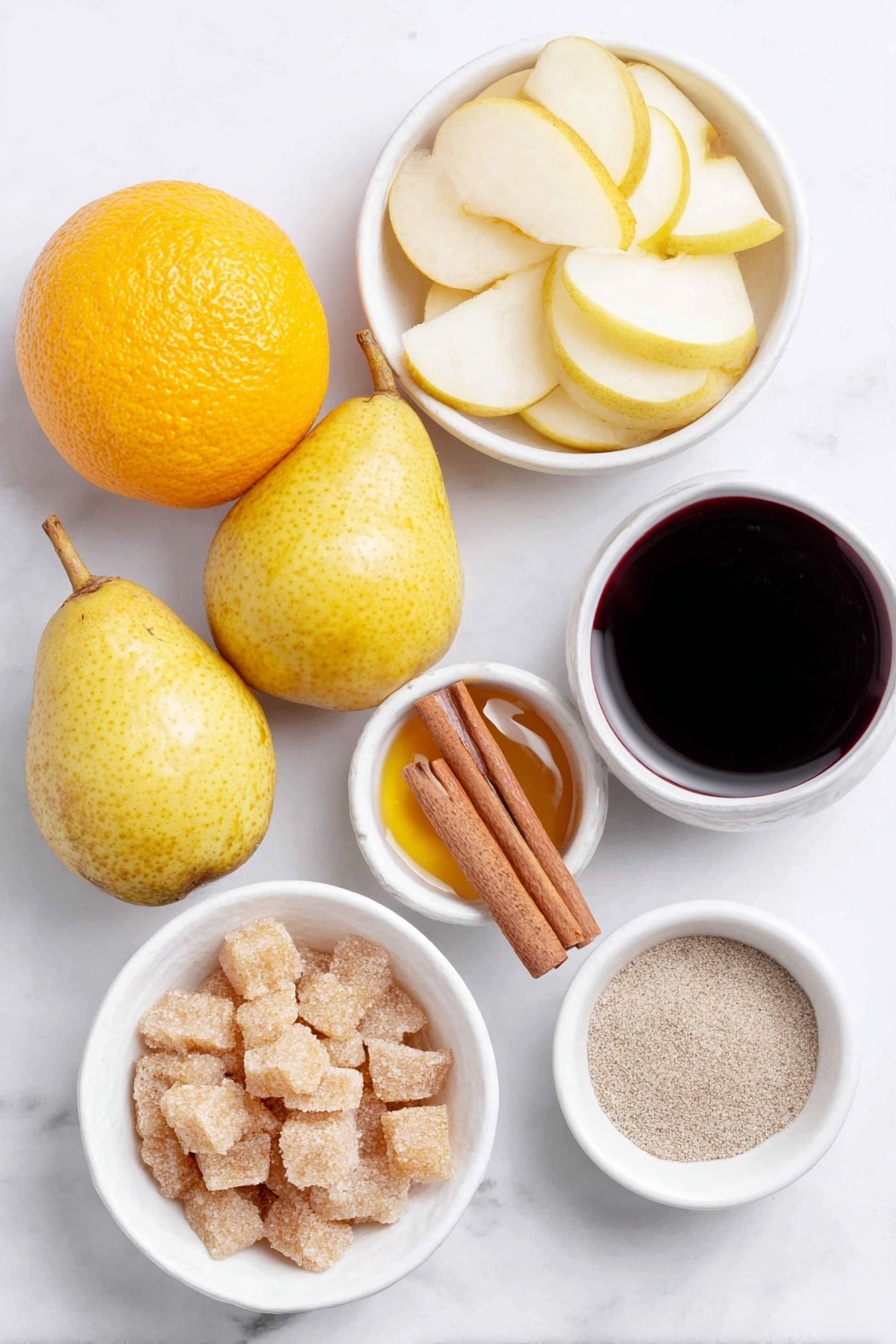
- Oranges: I prefer navel or cara cara for their natural sweetness and fragrant zest, which brightens the syrup.
- Pears: Ripe but firm, small pears are key to preventing mushy results and ensuring even cooking.
- Red wine: Pinot Noir or a similar dry red adds richness and depth without bitterness.
- Honey: A natural sweetener that adds a lovely floral note and balances the wine’s acidity.
- Raw sugar: Helps create a lightly caramelized syrup as it simmers.
- Cinnamon stick: Adds warmth and spice with subtle complexity.
- Ground cardamom: A touch of exotic spice that pairs beautifully with both wine and citrus.
Make It Your Way
Red Wine Poached Pears are wonderfully versatile, inviting you to play with flavors and textures to suit your taste or occasion. Whether you want to add a bit of extra spice or tailor it for a dietary preference, there’s room to make this classic French dessert truly yours.
- Spice it up: For a warming twist, try adding a few whole cloves or a star anise to the poaching liquid. I love how the cloves complement the cardamom and cinnamon, giving the pears an alluring autumnal depth.
- Alcohol-free version: Swap the red wine for pomegranate or black cherry juice for a non-alcoholic twist. I’ve made this version for family gatherings and it still yields beautifully tender pears with rich color and fruity flavors everyone enjoys.
- Nutty finish: Toasted almonds or pistachios sprinkled on top add a delightful crunch that contrasts the silky pear and syrup—one of my favorite ways to elevate this dessert for special occasions.
- Seasonal touch: Replace orange with lemon or grapefruit zest and juice for a brighter, tangier note during warmer months. It freshens the dish just enough to feel summery while keeping the comforting spices intact.
Step-by-Step: How I Make Red Wine Poached Pears Recipe
Step 1: Brighten It Up with Fresh Oranges
Start by zesting and juicing one of the oranges into a medium bowl—this citrusy juice is more than flavor; it helps prevent the pears from browning. Then, slice the second orange into thin ¼-inch rounds and set them aside. These slices will infuse the poaching liquid and add a pretty visual element to your final presentation. Take a moment here to inhale that fresh orange aroma—such a refreshing way to begin!
Step 2: Peel Pears with Care
Using a vegetable peeler, gently peel your pears while keeping them whole to maintain their lovely shape. I like to work carefully so the pears don’t bruise or tear. Toss the peeled pears in the orange juice you prepared—this step locks in freshness and keeps them looking enticingly bright until they're ready for the pot.
Step 3: Build the Poaching Liquid
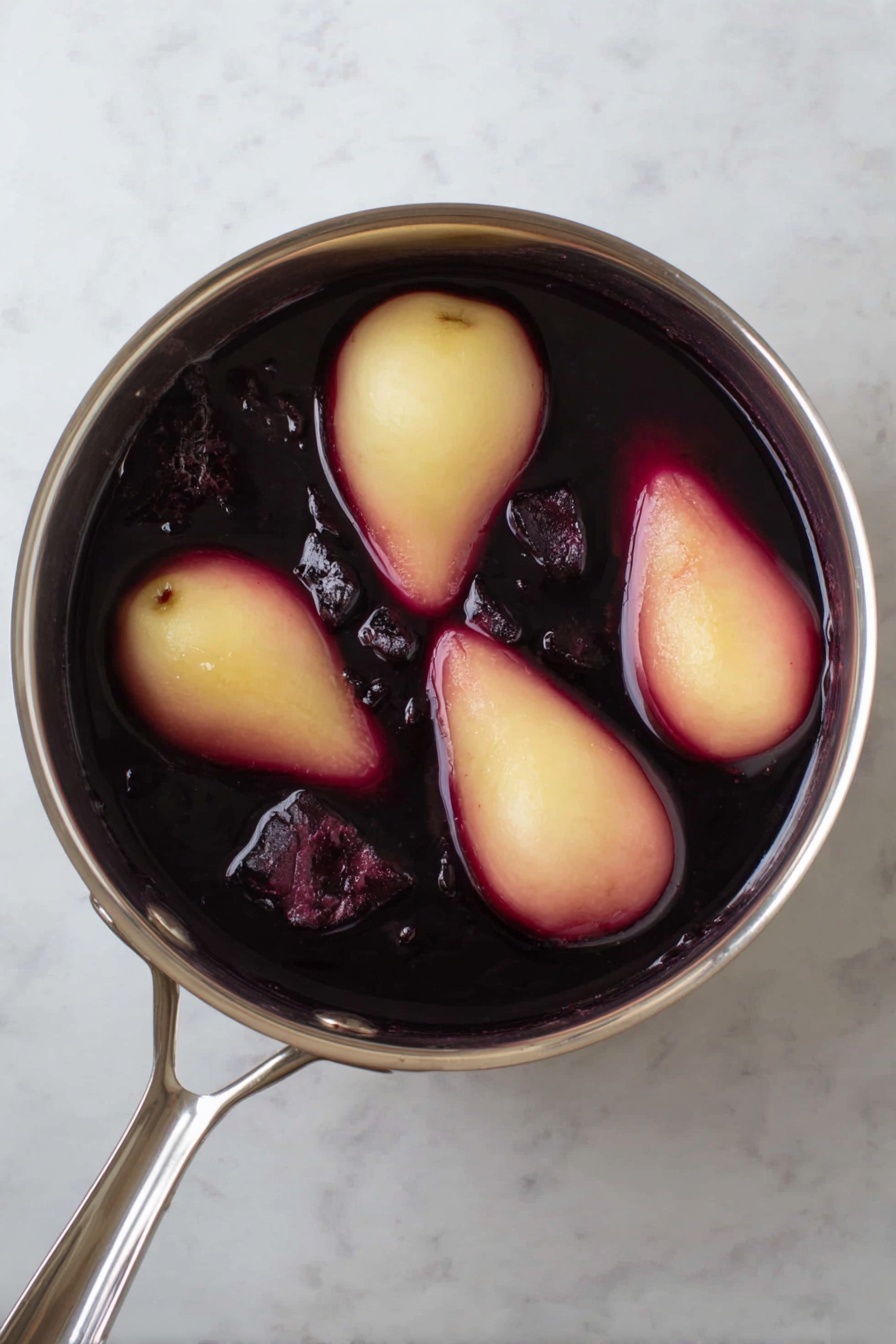
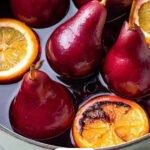
In a non-reactive pot (enameled works beautifully), add the orange slices, 2 cups of Pinot Noir, ¼ cup honey, 3 tablespoons sugar, the cinnamon stick, and ¼ teaspoon ground cardamom. These ingredients combine to create a fragrant, spiced base that will slowly infuse into the pears—setting the tone for the elegant flavors ahead.
Step 4: Poach to Perfection
Bring the mixture to a rolling boil over medium-high heat, then reduce to low. Carefully add the pears and the reserved orange juice from the bowl. Cover the pot and let things simmer gently for about 30 minutes, turning pears occasionally with a wooden spoon to ensure even color and tenderness. When a skewer slides in without resistance, you’ll know the pears are perfectly poached—soft yet still holding their shape.
Step 5: Thicken the Syrup and Cool
Transfer the poached pears back into the orange juice bowl to rest, while you return the pot to the stove uncovered. Simmer the remaining poaching liquid for 5 to 10 minutes until it thickens into a luscious syrup. This concentrated liquid is absolute magic drizzled over the pears when serving, so be patient and let it reduce just right.
Step 6: Serve and Savor
Arrange the pears upright in their syrup and allow them to cool until just warm or fully chilled. Serve with a drizzle of that glorious syrup and a sprinkle of fresh orange zest for a pop of color and brightness. If you want to deepen the flavors even more, refrigerate the pears overnight in the syrup—the wait is well worth the exquisite taste that develops. Don’t forget, pairing with whipped cream, mascarpone, or crème fraîche can add a silky richness that turns this into a true indulgence.
Top Tip
Mastering the art of making Red Wine Poached Pears is easier when you keep a few helpful tips in mind. These little nuggets come from experience and make your dessert truly shine every time.
- Choose the Right Pears: I found that smaller, firm pears like Anjou or Bosc hold their shape beautifully and cook evenly. Avoid overripe ones that can turn mushy during poaching.
- Gentle Simmering: Keeping the heat low after boiling prevents pears from becoming too soft or falling apart, ensuring a perfect tender bite.
- Use Quality Wine: A good dry red wine, such as Pinot Noir, really elevates the flavor. It doesn’t need to be expensive, but avoid anything too harsh or bitter.
- Don't Skip the Orange Juice Bath: Tossing peeled pears in fresh orange juice is a simple trick I discovered to prevent browning without masking flavor.
How to Serve Red Wine Poached Pears Recipe
Garnishes
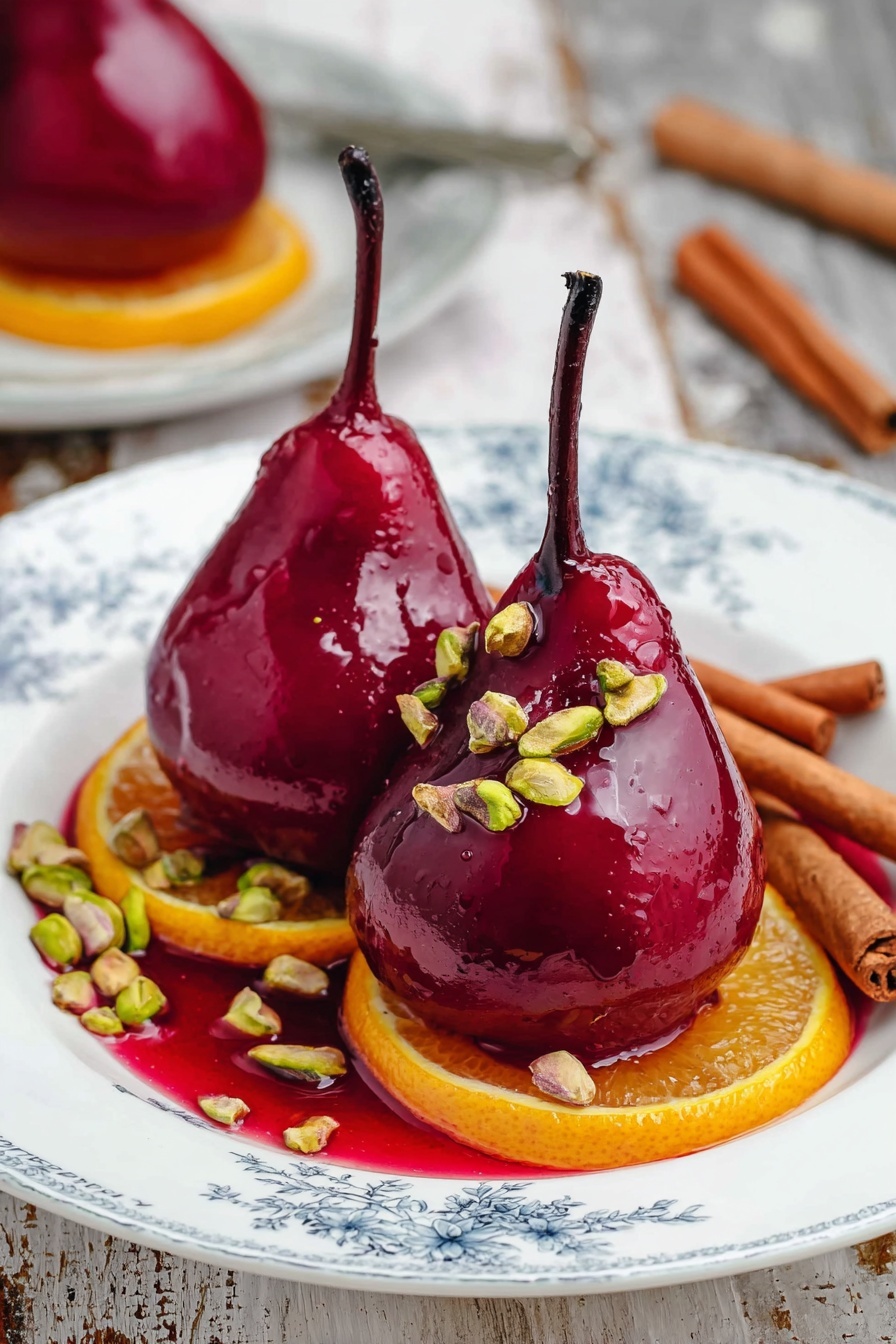
Adding a little something extra to your poached pears can take the presentation and taste even further. Consider sprinkling fresh orange zest on top for a bright, zesty contrast. A dollop of lightly whipped cream, mascarpone, or crème fraîche brings a creamy richness that complements the spiced syrup beautifully. Toasted nuts like slivered almonds or pistachios add crunch and texture, creating a more dynamic dessert experience.
Side Dishes
While the Red Wine Poached Pears recipe shines brilliantly on its own, pairing it with simple sides can transform your dessert plate. Serve alongside vanilla ice cream for a classic combination, or add a light almond cake or buttery shortbread cookie on the side to soak up the luscious syrup. A glass of the same red wine used for poaching can create a harmonious dining experience, completing your French-inspired dessert moment.
Make Ahead and Storage
Storing Leftovers
You can easily store leftover Red Wine Poached Pears in their poaching syrup in an airtight container in the refrigerator for up to 2 days. This not only keeps them fresh but also allows the pears to absorb even more of the flavorful spices and wine, enhancing the depth of taste.
Freezing
Freezing is not recommended for Red Wine Poached Pears as the texture of the pears may turn mushy after thawing, and the delicate syrup can separate. For best quality, enjoy them fresh or refrigerate them as suggested above.
Reheating
To reheat, gently warm the pears with some of their syrup over low heat on the stovetop until they’re just warm—about 5 minutes. Avoid high heat or microwave reheating as it may overcook the pears. Alternatively, serve them chilled straight from the fridge for a refreshing twist.
Frequently Asked Questions:
Yes! While Pinot Noir is recommended for its balance and smoothness, you can experiment with other dry red wines like Merlot or Cabernet Sauvignon. Just avoid overly sweet or very tannic wines to keep the flavors balanced.
The pears are done when a skewer inserted into the thickest part slides in easily without resistance. They should be tender but still hold their shape without falling apart.
Absolutely! These pears taste even better the next day after resting in the poaching liquid. Just store them covered in the fridge, and serve chilled or warmed gently before serving.
To prevent browning, peel the pears and toss them immediately in fresh orange juice, as outlined in the recipe steps. This natural acid keeps them looking fresh until you’re ready to poach.
Final Thoughts
Red Wine Poached Pears are a timeless dessert that beautifully marries simple ingredients with elegant technique. Whether you’re serving them for a family dinner or a special occasion, their fragrant spices and luscious syrup create a comforting yet sophisticated finish to any meal. I hope you enjoy making and savoring this recipe as much as I do—don’t forget, a little patience and care make all the difference. Bon appétit!
Print
Red Wine Poached Pears Recipe
- Prep Time: 10 minutes
- Cook Time: 35 minutes
- Total Time: 45 minutes
- Yield: 6 servings
- Category: Dessert
- Method: Stovetop
- Cuisine: French
- Diet: Vegetarian
Description
Red Wine Poached Pears are a classic French dessert featuring firm pears gently cooked in a fragrant mixture of red wine, orange, honey, and warm spices. The result is tender, delicately flavored pears with a luscious syrup perfect for serving warm or cold with a touch of zest or creamy accompaniments.
Ingredients
Fruit
- 2 large oranges, navel or cara cara preferred
- 6 ripe but firm small pears
Poaching Liquid
- 2 cups red wine such as Pinot Noir
- ¼ cup honey
- 3 tablespoons raw sugar or granulated sugar
- 1 cinnamon stick
- ¼ teaspoon ground cardamom
Instructions
- Prepare Orange Ingredients: Zest and juice one of the oranges and pour the juice into a medium bowl. Slice the remaining orange into ¼-inch rounds and set aside.
- Peel Pears: Using a vegetable peeler, peel the pears while keeping them whole, then add them to the bowl with the orange juice and toss gently to coat. This prevents browning while you prepare the rest.
- Prepare Poaching Pot: In a non-reactive pot (enameled recommended) that fits the pears snugly, add the orange slices, red wine, honey, sugar, cinnamon stick, and ground cardamom.
- Bring to Boil and Add Pears: Over medium-high heat, bring the liquid to a rolling boil. Reduce heat to low and carefully add the pears along with the orange juice from the bowl. Cover the pot and simmer gently for 30 minutes, turning pears occasionally with a wooden spoon to ensure even cooking. Check doneness by inserting a skewer into the thickest part of a pear; it should meet no resistance.
- Finish Syrup: Remove pears and place them back into the bowl. Continue simmering the poaching liquid uncovered until it thickens into a syrup, about 5-10 minutes.
- Cool and Serve: Arrange the pears upright in the syrup and allow them to cool until just warm or fully chilled. Serve with some of the syrup drizzled on top and optional orange zest garnish. Optionally, refrigerate overnight to enhance flavors.
Notes
- Wine poached pears taste better the next day after absorbing more of the spiced poaching liquid flavors.
- Use small, firm pears such as Anjou or Bosc for optimal texture and cooking time; avoid overly large or overripe pears.
- Serve with a drizzle of the syrup and consider accompaniments like whipped cream, mascarpone, or crème fraîche for added richness.
- The poached pears can be refrigerated in their syrup for up to 2 days for convenience and deeper flavor.
- Choosing a good-quality dry red wine such as Pinot Noir will enhance the overall taste.
Nutrition
- Serving Size: 1 pear with syrup
- Calories: 180 kcal
- Sugar: 22 g
- Sodium: 5 mg
- Fat: 0.2 g
- Saturated Fat: 0 g
- Unsaturated Fat: 0.2 g
- Trans Fat: 0 g
- Carbohydrates: 45 g
- Fiber: 4 g
- Protein: 0.6 g
- Cholesterol: 0 mg


Leave a Reply